The Passport Marketplace: Inside the Countries Selling Citizenship
There is a quiet corner of the travel and finance world where a passport is treated less like a birthright and more like a product. It comes with a price tag, a due diligence process, and, for the right buyer, a new legal identity within months rather than decades. This is the business of citizenship by investment, and in 2026 it spans roughly thirteen active programs, concentrated in the Caribbean but reaching into Europe, the Pacific, the Middle East, and beyond.
The premise is simple to state. A government grants full citizenship, not mere residency, to a foreigner who makes a qualifying economic contribution. That contribution might be an outright donation to a national fund, a purchase of approved real estate, or an investment in a local business or bond. In exchange, the applicant and often their spouse, children, and sometimes parents receive a passport, usually without ever needing to set foot in the country. The idea traces to 1984, when St Kitts and Nevis, freshly independent from Britain, passed a Citizenship Act permitting exactly this. What began as a narrow legislative experiment on one small island has since become an entire industry of agents, lawyers, and due diligence firms.
The Caribbean Five
Five island nations dominate the field and are collectively known in the industry as the Caribbean Five. Since mid 2024 they have operated under a regional agreement that set a shared floor of two hundred thousand dollars for the donation route, so their headline prices now sit close together, though real differences remain in family pricing, processing speed, and the paths each offers into the United States.
Dominica is the value leader, with a donation of two hundred thousand dollars for a single applicant, the lowest of the five, and a real estate route from the same figure with a required holding period of three years. Processing typically runs several months and Dominica is often chosen by applicants for whom price is the deciding factor.
Antigua and Barbuda opens at two hundred thirty thousand dollars through its National Development Fund, or two hundred sixty thousand dollars through a University of the West Indies fund that becomes competitive for larger households, since it can cover a family of six. Antigua also permits, uniquely among the five, an application built around a family of four without additional per person costs at that threshold, which makes it a frequent recommendation for larger families.
Grenada requires two hundred thirty five thousand dollars by donation or roughly two hundred seventy thousand dollars by real estate. Its defining feature is a bilateral treaty with the United States that makes Grenadian citizens eligible for the American E2 investor visa, a route into US residency that no other Caribbean passport offers, which has made Grenada a favourite among applicants with eventual US ambitions.
Saint Lucia sits at two hundred forty thousand dollars for its National Economic Fund donation, a figure that covers a main applicant and up to three dependants in one base price, an unusually generous family structure compared with its neighbours. Its real estate route runs from around two hundred thousand dollars into government approved resort projects, with processing among the longer of the five, often stretching toward a year.
St Kitts and Nevis, the pioneer of the entire industry, is now the most expensive of the group at two hundred fifty thousand dollars by donation or four hundred thousand dollars by real estate. It compensates with the fastest processing in the region, often under six months, and the deepest track record with international banks, a factor that matters enormously once a new citizen tries to actually use the passport to open accounts abroad.
Beyond the Caribbean
Outside the Caribbean, the Pacific offers the two cheapest programs anywhere. Vanuatu asks for a contribution as low as one hundred thirty thousand dollars, with an even lower promotional rate reported for 2026, and can issue a passport in as little as two to three months, though its passport has lost some of its European access in recent years after scrutiny from the EU. Nauru launched its own program in 2024 at a similar entry point near ninety to one hundred fifteen thousand dollars and processes almost as quickly, while also standing out for extending eligibility to unmarried couples, same sex couples, and stateless applicants, a rare inclusivity clause in this industry.
São Tomé and Príncipe, off the coast of West Africa, has emerged as one of the least expensive routes on the market, with entry points reported from around ninety thousand dollars, though it carries little history with international banks and applicants should weigh that against the low headline cost.
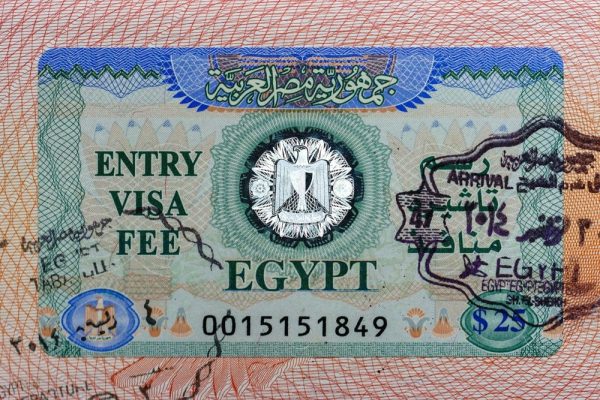
Egypt and Jordan represent a Middle Eastern and North African tier priced similarly to the Caribbean, at roughly two hundred fifty thousand dollars and the equivalent of about three hundred fifty thousand Jordanian dinars respectively, both requiring more substantial documentation and, in Jordan's case, a program aimed particularly at regional investors seeking a foothold between Europe, Asia, and Africa.
Turkey occupies its own tier, requiring a real estate purchase of at least four hundred thousand dollars, held for a minimum period before resale. It is not the cheapest option, but a Turkish passport carries genuine regional weight and, notably, opens eligibility for the American E2 treaty visa in the same way Grenada's does, making it a common second choice for applicants who want both speed and an eventual American option.
Malta deserves a separate note because its programme changed fundamentally. The original cash for passport scheme, which had opened at roughly six hundred thousand euros, was struck down by the Court of Justice of the European Union in April 2025 for effectively commercialising EU citizenship. Malta has since replaced it with an Exceptional Services naturalisation framework that folds a much larger contribution, now reported near seven hundred fifty thousand euros, together with a genuine residence period of many months and a property purchase or lease, before citizenship is granted. It is no longer a fast transaction in the Caribbean sense, and buyers should treat any agent still marketing a simple Malta passport purchase with real caution.
What Is Coming
The map keeps shifting. Saint Vincent and the Grenadines is preparing to join the Caribbean bloc with a donation route estimated near two hundred thousand dollars, alongside a light residency requirement that sets it apart from its neighbours' hands off approach. Argentina has signalled a program aimed at investors in renewable energy and technology, in the region of three hundred to five hundred thousand dollars, though its rollout has lagged its own announcements. African nations are also beginning to study the model, a sign that a framework first tested on small island economies is being examined well beyond the Caribbean.
The Fine Print That Matters Most
None of this comes without gatekeeping. Every program now runs applicants through layered background checks covering source of funds, criminal history, and international sanctions lists, and nationals of countries considered high risk for illicit finance are frequently excluded outright. Due diligence has tightened noticeably over the past several years, largely in response to pressure from the European Union and the United States over how easily some of these passports could, in theory, ease travel restrictions or sanctions elsewhere. Real estate routes generally require a holding period of three to seven years before resale, and buyers should treat that property less as an investment and more as the true cost of the passport. Family pricing varies more than headline numbers suggest, so a household of five or six should compare total cost across programs rather than the single applicant figure most marketing leads with.
For governments, especially the smallest island economies, this remains a genuine source of foreign revenue that can rival tourism receipts. For buyers, it remains one of the few legal instruments left that converts capital directly into a new legal identity. Whether the map keeps expanding into new regions or draws tighter regulatory limits, as Malta's case suggests it might, will likely be one of the more interesting stories in global mobility over the years ahead.