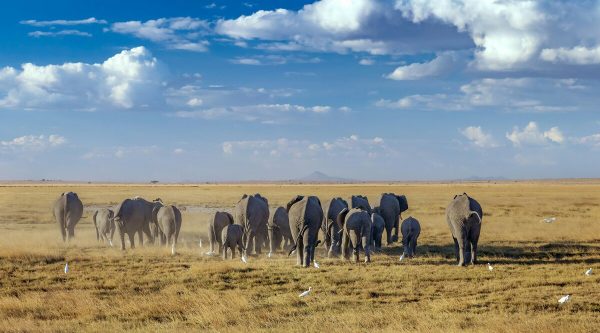
There is a single image that draws more travellers to southern Kenya than almost any other on the continent. A line of elephants moving across an open plain, dust rising gently around their feet, while behind them the snow capped dome of Mount Kilimanjaro fills the sky. That photograph is almost always taken in Amboseli, and once you have seen it in person, every other savannah view feels like a rehearsal for this one.
Amboseli National Park sits in southern Kenya, close to the Tanzanian border, roughly four hours by road from Nairobi or a short forty minute flight from Wilson Airport. It is a modest park by African standards, covering around 392 square kilometres, yet it holds one of the densest and most habituated elephant populations anywhere in the world, along with a backdrop that no other reserve on earth can claim. This guide covers everything you need to plan a visit, from the best months to travel and current park fees, to where to stay and which other destinations pair beautifully with an Amboseli safari.
When to Visit Amboseli
Amboseli rewards travellers throughout the year, but the experience shifts considerably with the seasons. The dry months, running roughly from June to October and again from January to February, are when the park performs at its most dramatic. Vegetation thins out, water becomes scarce outside the central swamps, and animals concentrate close to the remaining wetlands, making sightings easier and more frequent. This is also, crucially, when Kilimanjaro is at its clearest. Clouds tend to gather around the mountain in the afternoon regardless of season, so early morning game drives offer the best chance of an unobstructed view of Africa's tallest peak rising above the herds.
The long rains fall between March and May, and the short rains arrive in November. Travelling during these windows means lower rates, thinner crowds, and a landscape turned a startling green, though wildlife disperses more widely across the ecosystem and Kilimanjaro spends more time wrapped in cloud. For photographers chasing that iconic elephant and mountain composition, June through October remains the surest bet. For travellers who prioritise value and solitude over guaranteed mountain views, the shoulder months are well worth considering.
Park Entry Fees
Kenya Wildlife Service classifies Amboseli as a premium park, placing it in the same pricing tier as Lake Nakuru rather than the more modest fees charged at Tsavo or Meru. As of the current 2026 rates, non resident adults pay ninety US dollars per person for a twenty four hour entry period, while non resident children under eighteen pay forty dollars. Kenyan and East African citizens pay around fifteen hundred shillings, and residents holding valid Kenyan documentation pay slightly more at roughly two thousand and twenty five shillings. These figures move periodically as KWS revises its pricing structure, so travellers booking independently should always confirm current rates through the official eCitizen payment portal before arrival. Most safari packages, including those built through a tour operator, already fold the park fee into the total cost, so it rarely appears as a separate line item once you are travelling on a booked itinerary.
Ownership of Amboseli is also shifting. Under a deed signed in October of last year, management responsibility is gradually transferring from the national government to Kajiado County, with revenue sharing beginning this July and full county control targeted for 2028. Travellers should not expect this to change the visitor experience in the near term, but it is worth knowing the fee structure may continue to evolve over the coming seasons.
The Views That Define Amboseli
Kilimanjaro is the reason most people come, but it is far from the only reason they fall in love with the park. Amboseli's central feature is a series of permanent swamps fed by underground rivers flowing off the slopes of the mountain itself, and these wetlands sustain wildlife even in the driest months when the surrounding plains turn to dust. Observation Hill, a small volcanic outcrop near the park headquarters, offers one of the few spots in Kenya where visitors are permitted to step out of their vehicle for a panoramic view over the swamps and the herds moving through them.
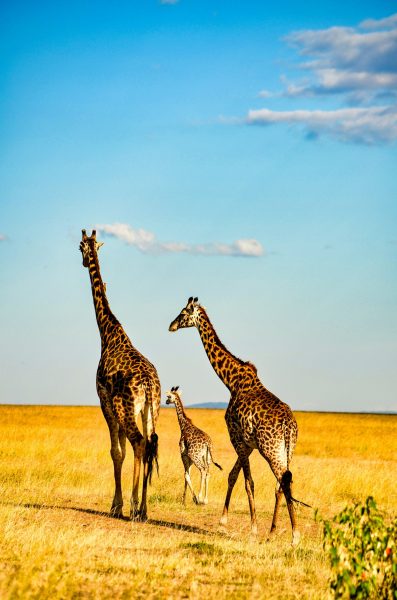
The elephants here are part of one of the longest running wildlife studies on the planet, tracked continuously since the 1970s, and many of the older matriarchs are recognised individually by researchers and guides alike. Beyond elephants, the park supports lion, cheetah, hyena, giraffe, buffalo, and well over four hundred recorded bird species, particularly around the swamp edges where herons, storks, and pelicans gather in large numbers.
Where to Stay
Amboseli offers accommodation across every comfort level, and the choice often comes down to whether you want to wake up inside the park boundaries or on a private conservancy just outside them. Lodges and tented camps within the park itself put you closest to the elephant herds and the classic Kilimanjaro backdrop, though rooms here tend to book up well in advance during peak season. Properties along the park's southern edge, particularly those facing the mountain directly, are prized for sunrise views that rival anything found inside the gates.
For travellers seeking a quieter, more exclusive experience, the private conservancies bordering Amboseli allow night game drives and guided walking safaris that are not permitted inside the national park proper, along with a lower density of vehicles at each sighting. Budget travellers are well served too, with comfortable tented camps just outside the park offering full board stays at a fraction of the cost of the luxury lodges, without sacrificing much in terms of proximity to the wildlife. Whichever tier suits your trip, booking through a licensed local operator typically secures better rates than approaching properties directly, since operators negotiate contracted pricing well below public rack rates.
Combining Amboseli With Other Destinations
Amboseli's position in southern Kenya makes it one of the easiest parks in the country to combine with other iconic destinations, and few visitors treat it as a standalone trip.
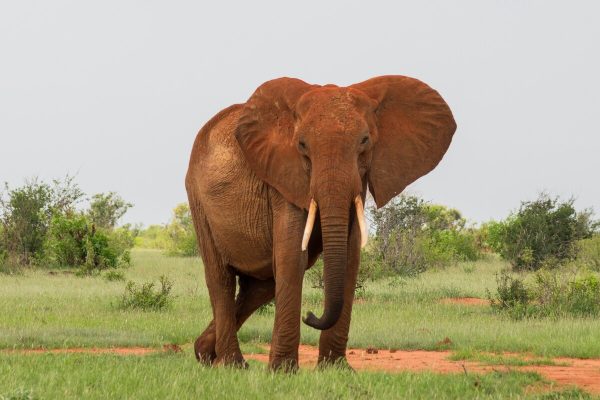
The most natural pairing is with the Masai Mara, giving travellers both of Kenya's signature landscapes, Kilimanjaro's elephants and the Mara's big cat drama, within a single itinerary of seven to ten days. Tsavo East and Tsavo West lie a short drive to the southeast and combine well for travellers who want a longer overland safari through southern Kenya's red earth landscapes, home to the famous red dusted elephants of Tsavo. For those who want to end their trip on sand rather than savannah, Diani Beach or the wider Kenyan coast is easily reached by a short domestic flight from Amboseli or Nairobi, turning a wildlife trip into a classic safari and beach holiday. Nairobi itself, with its National Park practically inside the city limits, the Giraffe Centre, and the David Sheldrick Wildlife Trust, works well as a bookend on either side of an Amboseli safari, particularly for travellers with a long layover before an international flight.
Travellers with more time on their hands sometimes extend across the border into northern Tanzania, pairing Amboseli with Arusha and the Serengeti ecosystem, since Kilimanjaro International Airport sits within reach of the southern Kenyan parks. Closer to home, Lake Naivasha and the wider Rift Valley lakes offer a change of scenery on the return leg to Nairobi, adding boat rides and flamingo viewing to a trip otherwise built around game drives.
Planning Your Amboseli Safari
Amboseli rewards travellers who plan around the mountain rather than the calendar alone. Aim for early morning drives regardless of season, since Kilimanjaro is almost always at its clearest before the midday clouds build, and budget your itinerary so that Amboseli forms part of a wider loop rather than a single stop. Whether paired with the Mara, the Tsavo parks, or a few days unwinding on the coast, Amboseli tends to leave a stronger impression than its modest size would suggest, largely because nowhere else in Africa puts elephants and one of the world's most recognisable mountains in the same frame.