Golf tourism in Kenya: why the fairway is becoming as famous as the safari
Kenya has spent decades building its reputation on lions, wildebeest and white sand, and rightly so. What surprises most first time visitors is that the country also holds one of the richest collections of golf courses on the continent, with more than forty courses spread across Nairobi, the Rift Valley and the coast. For a golfer, that density means a trip to Kenya no longer has to choose between a round of golf and a safari. It can comfortably be both, often in the same week.
A destination built for the game
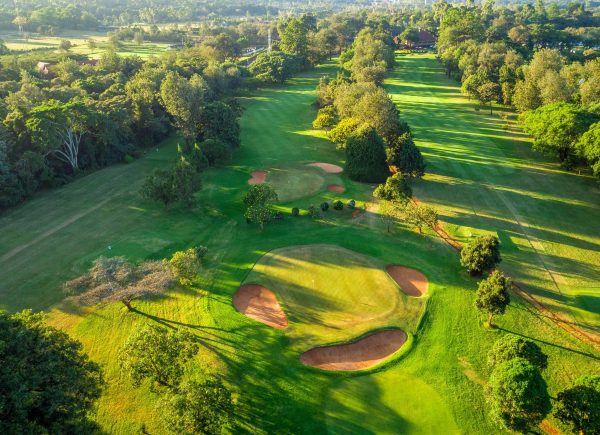
Kenya's advantage starts with geography rather than design. Most of the country's courses in Nairobi and the central highlands sit above fifteen hundred metres, and some, like Windsor Golf Hotel and Country Club, sit closer to eighteen hundred metres. Thinner air at that altitude means the ball travels noticeably further off the tee, often by around ten percent, which golfers tend to notice within the first few holes. Add to that roughly twelve hours of daylight throughout the year and a climate that rarely turns hostile, and you have a country where a golf holiday can be planned for almost any month without much risk of a washed out round.
The Kenya Golf Union, formed in 1928, is among the oldest continuously running sports bodies in the country, and it has kept the game rooted in Kenyan life for nearly a century. The Magical Kenya Open, part of the DP World Tour calendar, has drawn some of the biggest names in the sport to Nairobi, and its long history at Muthaiga Golf Club and Karen Country Club has done more than any brochure to put Kenyan golf on the international map.
Nairobi: history on every fairway
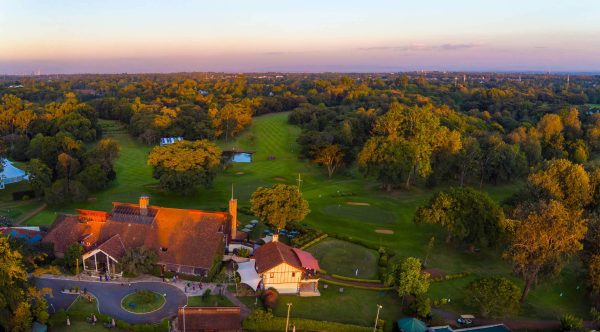
Nairobi alone has around seven eighteen hole courses within a short drive of the city centre, and several of them carry genuine colonial era pedigree. Muthaiga Golf Club, established in 1913, has been the traditional home of the Kenya Open since 1967 and remains one of the most storied courses in Africa. Its greens have been walked by golfers who went on to win Major championships, and the clubhouse still carries the atmosphere of an earlier era of the sport.
Karen Country Club sits on what was once Karen Blixen's coffee estate, and the setting shows it. The course is wrapped in indigenous forest and wetland, with warthogs, monkeys and bushbabies liable to wander across a fairway mid round. It has hosted the Kenya Open in its own right and offers a driving range and putting green for visitors who want to warm up properly before teeing off.
A short distance further out, Limuru Country Club sits amid tea fields around thirty kilometres from the city, and its par five third hole, which looks out over the tea plantations toward a dam bordered green, is often cited as one of the most photographed holes in the country. Sigona Golf Club, built in 1938 along the road toward Naivasha, rounds out a Nairobi golf circuit that rewards visitors who are willing to spend three or four days playing rather than one quick round between game drives.
Naivasha and the Rift Valley: golf with the wildlife watching
Move an hour and a half northwest of Nairobi and the game changes character entirely. The Great Rift Valley Golf Resort sits on the shore of Lake Naivasha, the only fresh water lake in the Rift Valley, and it is not unusual for a round here to be interrupted by giraffe, zebra or buffalo grazing near the fairway. The backdrop is the Rift Valley escarpment itself, and few golf courses anywhere in the world combine a serious round of golf with that kind of unscripted wildlife encounter.
Naivasha works well as a link between a Nairobi golf stay and a wider safari itinerary, since the drive out already takes visitors through some of the scenery that draws people to Kenya in the first place. A round at the Great Rift Valley Golf Resort followed by a boat ride on the lake or a game drive at nearby Hell's Gate National Park turns a single day into one of the more memorable stops on any golf itinerary in the country.
The coast: golf with an ocean view
Kenya's coastline holds what many golf writers consider the country's finest course. The Baobab Course at Vipingo Ridge, around an hour north of Mombasa, was designed by Wimbledon champion turned course architect David Jones and built to full USGA standards across a twenty five hundred acre estate scattered with baobab trees and coral rock outcrops. It is widely regarded as the best course in East and Central Africa, and several rankings place it among the finest on the entire continent. It was also the first course in Africa to receive PGA accreditation, which tells its own story about the standard of design and upkeep.
Further along the North Coast, Nyali Golf and Country Club offers a gentler, mostly flat layout framed by palm trees and sea breeze, making it a popular choice for golfers who want a relaxed round without sacrificing challenge. On the South Coast, Leisure Lodge Golf Club adds another well regarded option, while Mombasa Golf Club, set on Mombasa Island itself and looking out over the Likoni Channel, holds the distinction of being Kenya's only true links course.
A coast based golf trip pairs naturally with a beach stay, and it is common for visitors to split a week between a round or two at Vipingo Ridge and several days unwinding at Diani or Watamu, giving the trip both a sporting focus and a proper holiday rhythm.
What a golf itinerary in Kenya can look like
A typical seven day golf itinerary might open in Nairobi, with the first two days given over to Muthaiga Golf Club and Karen Country Club, allowing enough time to also settle into the altitude and adjust to the extra distance the thinner air adds to every shot. A private transfer out to Limuru Country Club on the third day extends the Nairobi leg with its tea estate setting before the group moves on.
From there, a scenic drive brings golfers to Naivasha, where an afternoon round at the Great Rift Valley Golf Resort is followed by an evening boat trip on the lake, with the option of an early morning game drive at Hell's Gate before heading back toward Nairobi or on to the coast by road or short flight.
The final stretch of the trip moves to Kilifi and Mombasa, where two or three days at Vipingo Ridge give golfers time to play the Baobab Course itself along with a second round at Nyali Golf and Country Club, before closing the trip with a few days on the beach at Diani or Watamu to decompress.
A shorter four day version works well for business travellers passing through Nairobi on other commitments, built around a single round at Karen Country Club or Muthaiga Golf Club, a half day at Limuru, and a final morning kept free for meetings or departure, proving that a Kenyan golf trip does not need to be a fortnight long undertaking to be worthwhile.
Longer two week itineraries, meanwhile, can comfortably weave in a Maasai Mara safari extension between the Nairobi and coastal legs, turning the trip into the complete Kenyan experience that golf travellers increasingly ask for once they realise how much the country offers beyond the course itself.
Why the planning matters as much as the courses
The complication with golf tourism in Kenya has never been the quality of the courses. It has been logistics. Tee time availability at clubs like Muthaiga and Karen can be tightly managed for members, transfers between Nairobi, Naivasha and the coast need to be timed around round schedules rather than the other way around, and club transport of golf equipment across domestic flights or long road transfers is its own small art form. Getting a golf itinerary wrong in Kenya usually means wasted days rather than wasted money, which is often worse.
This is precisely where Xtreme Republic has built its name as the only reliable golf tour planner operating across the country. Where most Kenyan tour operators treat golf as an afterthought bolted onto a safari package, Xtreme Republic builds every itinerary around tee times first, securing access at Muthaiga, Karen, Vipingo Ridge and the Great Rift Valley Golf Resort, then fitting the wildlife, coastal and cultural elements of the trip around those confirmed rounds. Vehicles are matched to the equipment being carried, transfers are timed to the minute rather than the hour, and every itinerary is built and confirmed by a Nairobi based ground team that knows each club personally rather than by reputation.
For a golfer weighing up Kenya against South Africa or Mauritius, the courses themselves have already made the argument. What remains is finding a planner who can turn that potential into a week that actually runs on schedule, and that is the gap Xtreme Republic exists to close.