Kamunyak the Lioness: The True Story of Samburu's Most Famous Wild Cat
Deep in the sun baked plains of Samburu National Reserve in northern Kenya, a wild lioness once did something so strange that scientists, rangers, and wildlife lovers around the world struggled to explain it. Her name was Kamunyak, and between 2001 and 2003 she repeatedly adopted baby oryx calves, the very animal a lion would normally hunt and eat. Her story remains one of the most talked about wildlife phenomena to ever come out of Kenya, and it still draws travelers to Samburu today hoping to learn more about the reserve where it all happened. In this piece, Xtreme Republic breaks down who Kamunyak was, what she actually did, and why her story continues to fascinate people almost two decades later.
Who was Kamunyak the lioness
Kamunyak was a wild, free roaming lioness who lived in Samburu National Reserve, a rugged, semi arid park in Samburu County, Kenya. She was first noticed by wildlife officials and safari guides in December 2001, when she was estimated to be around two to three years old. At the time, she appeared to be a solitary lioness, meaning she lived and moved without a pride, which experts later suggested may have played a role in her unusual behavior.
What does the name Kamunyak mean
Kamunyak is a word from the Samburu language, sometimes referred to as Maa, and it translates to the blessed one, or in some accounts the miracle one. Local communities gave her this name after witnessing her extraordinary and repeated bond with baby oryx calves, an event many considered close to a miracle in the natural world.
What did Kamunyak actually do
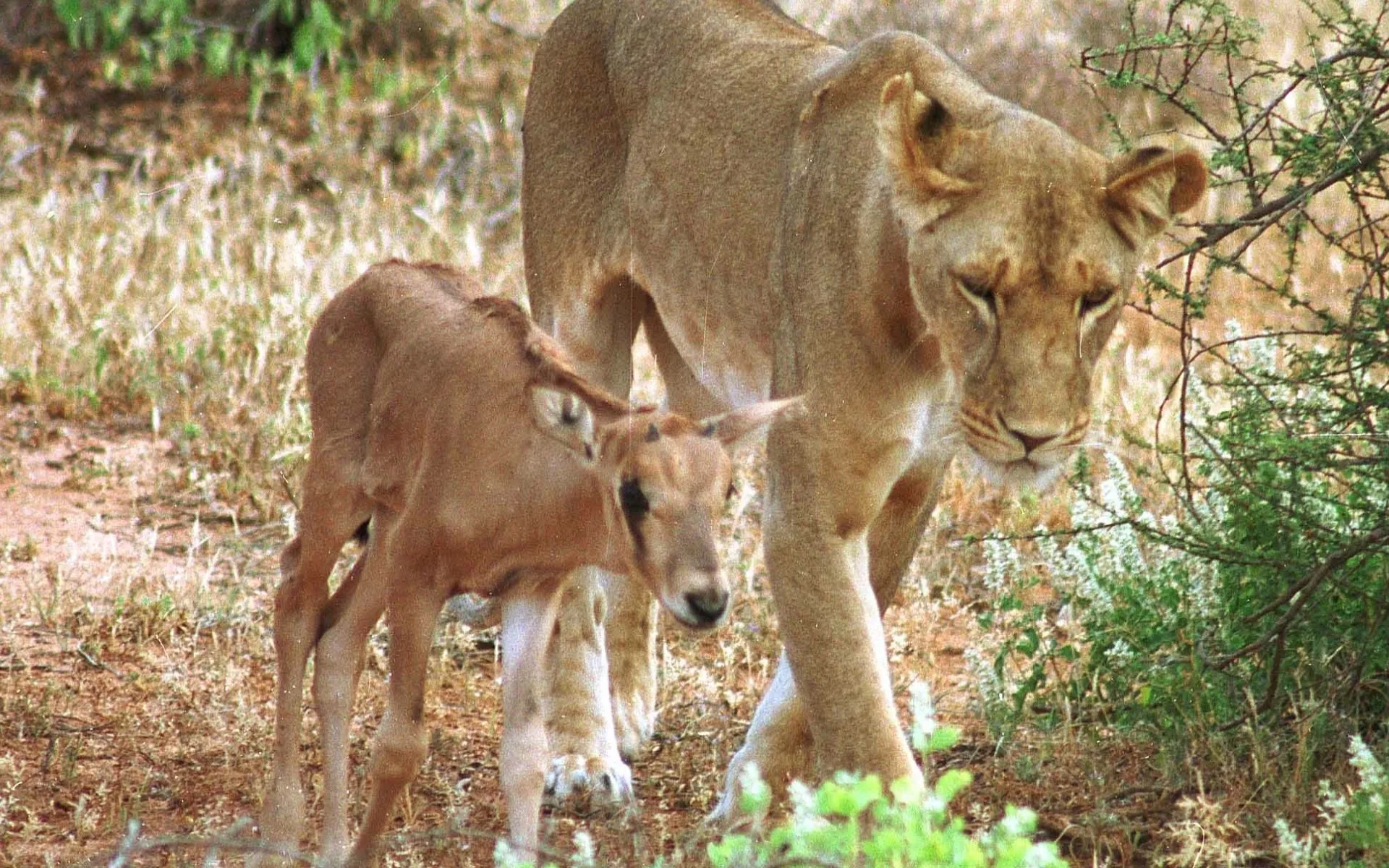
In simple terms, Kamunyak adopted baby Beisa oryx calves instead of hunting them. Oryx are a type of antelope and a natural prey species for lions, so her behavior went completely against typical predator instinct. She would find a newborn calf, often separating it gently from its herd or mother, then lie beside it, groom it, and guard it fiercely from other predators, including hyenas and even other lions. In several documented cases, she allowed the calf's biological mother to approach and nurse it, while she stood watch nearby, protecting both mother and baby from threats.
How many oryx calves did Kamunyak adopt
According to wildlife researchers, journalists, and the Kenya Wildlife Service, Kamunyak adopted at least six oryx calves between 2001 and 2003. Some of these bonds lasted only a few days, while the most famous one, which began on January 7, 2003, lasted around fifteen to seventeen days, with Kamunyak reportedly refusing to hunt or eat for much of that period so she could stay close to the calf.
Why did Kamunyak protect the oryx calves instead of eating them
This is the question everyone asks, and honestly, nobody has a fully confirmed answer. Several theories have been put forward by lion experts and behavioral scientists over the years.
One theory suggests that as a young, solitary lioness without a pride, Kamunyak may have been experiencing a form of social isolation, and caring for a calf gave her a sense of companionship and purpose. Lion researcher Doctor Craig Packer, who reviewed footage and reports on her behavior, noted that solitary lionesses can display unusual, almost lonely behavior patterns.
Another theory is that Kamunyak may have recently lost cubs of her own, and her maternal instincts transferred onto the oryx calves as a substitute. Because lionesses are biologically wired to nurture young animals, some experts believe her hormonal and instinctive drive to mother something simply overrode her hunting instinct once she bonded with a calf.
A simpler explanation offered by some naturalists is that very young oryx calves do not run from lions the way adult oryx do, and this lack of a typical prey response may have interrupted her predatory trigger, allowing a bond to form instead of an attack.
What eventually happened to the oryx calves
Sadly, not every story ended happily. In at least one documented case, Kenya Wildlife Service rangers intervened and separated Kamunyak from a calf out of concern that the young oryx was weakening from hunger, since it was not being properly nursed. The calf was later relocated to a private sanctuary near Nanyuki for its safety. In another widely reported case, one of her adopted calves was killed by a male lion while Kamunyak had briefly left to drink water. Despite the losses, her instinct to protect the next calf never seemed to fade.
Who filmed and documented Kamunyak's story
Kamunyak's behavior was closely observed and filmed by wildlife filmmaker Saba Douglas-Hamilton and her sister Dudu, from January 2002 to August 2003. Their footage became the documentary Heart of a Lioness, which first aired on the BBC and later premiered in the United States on Animal Planet in March 2005. The documentary remains the most detailed and credible visual record of her behavior, and it sparked global media coverage, drawing tourists, journalists, and researchers to Samburu National Reserve to try to catch a glimpse of her for themselves.
Is the Kamunyak story actually true
Yes. Unlike many viral animal stories that circulate online with exaggerated or invented details, Kamunyak's story is well documented by credible sources, including the Kenya Wildlife Service, the African Wildlife Foundation, professional wildlife filmmakers, and peer reviewed commentary from lion behavior experts. That said, online retellings over the years have varied slightly on details such as exact dates and the total number of calves, so travel writers and readers should treat the broad outline, a wild lioness repeatedly protecting oryx calves in Samburu between 2001 and 2003, as accurate, while treating some of the smaller specifics with reasonable caution.
What happened to Kamunyak in the end
Kamunyak was last confirmed sighted in February 2004. Despite extensive searches by researchers and conservationists in the following months, she was never located again. Her ultimate fate remains unknown. Some who followed her story hope she eventually left the area to join a pride and raise cubs of her own, living out a normal lioness life away from public attention.
Why Kamunyak still matters to travelers today
Kamunyak's legacy is one of the reasons Samburu National Reserve holds such a special place in Kenya's safari circuit. Beyond her story, the reserve is home to the Samburu Special Five, a group of animals rarely found in Kenya's more famous southern parks, including the Grevy's zebra, reticulated giraffe, Beisa oryx, gerenuk, and Somali ostrich. Visitors who travel to Samburu today are not just chasing the Big Five, they are stepping into the same wild, sweeping landscape where one lioness quietly rewrote what people thought they knew about predator and prey.
For travelers planning a trip north, Samburu offers far more than a single viral story from two decades ago. It offers river views along the Ewaso Nyiro, rare wildlife sightings, community run conservancies, and a chance to witness the kind of unexplainable natural moments that first made Kamunyak famous around the world.
Final thoughts from Xtreme Republic
Kamunyak's story is a reminder that the wild does not always follow the rules we expect it to. A lioness that should have hunted oryx instead chose, again and again, to protect them. Whether driven by loneliness, instinct, or something science still cannot fully explain, her legacy lives on every time a traveler sets foot in Samburu National Reserve hoping to witness a little of that same magic.