Multi Country East Africa Itineraries for First Timers
East Africa rewards travelers who think beyond a single border. The region's parks, lakes, and coastlines sit close enough together that a first safari rarely has to mean a single country. For someone stepping onto the continent for the first time, the real question is not whether to combine destinations but which combination suits the time, budget, and sense of adventure they are bringing with them. Below is a look at every realistic way to link East Africa's countries into one seamless trip, along with what each route actually delivers.
Kenya and Tanzania: the classic circuit
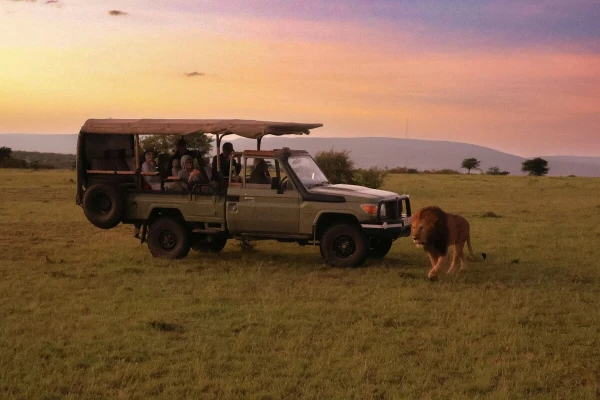
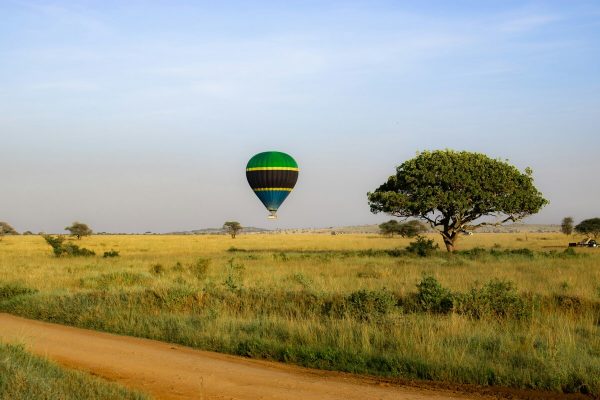
This is the pairing most first timers picture when they imagine an African safari, and for good reason. Kenya's Masai Mara and Tanzania's Serengeti are two halves of the same ecosystem, separated only by a political line that the wildlife itself ignores. A traveler who spends a few days in the Mara chasing lion prides and open plains can cross into the Serengeti and continue the same story, often catching a different stage of the great migration depending on the month. Add the Ngorongoro Crater on the Tanzanian side for a concentrated, almost theatrical day of game viewing, then finish on Zanzibar's beaches for a few days of rest. The rhythm of savannah, crater, and coast is what makes this route so enduring, and it remains the easiest introduction to East African safari travel because both countries have mature tourism infrastructure and frequent connecting flights between Nairobi, Arusha, and Zanzibar.
Travelers with slightly less time can trim this into a shorter Kenya only or Tanzania only version, but doing both countries is what turns a good safari into a genuinely comprehensive one, since each park has its own character even within the same migration story.
Kenya and Uganda: savannah meets the primates
Where the Kenya and Tanzania route is about scale and open plains, pairing Kenya with Uganda introduces something entirely different into the trip: the forest. A typical itinerary opens with a few days in the Masai Mara or Amboseli, then flies into Entebbe to head toward Bwindi Impenetrable Forest for gorilla trekking, one of the most sought after wildlife encounters on the planet. Some itineraries add chimpanzee tracking in Kibale Forest along the way, and a stop in Queen Elizabeth National Park bridges the gap between forest and savannah with tree climbing lions and boat cruises along the Kazinga Channel. This combination suits a traveler who wants both the iconic big cat safari and a primate encounter that no East African country can replicate quite like Uganda can, and it works well for anyone with roughly ten to twelve days to spend.
Kenya and Rwanda: an easier gorilla pairing
Rwanda has become the more polished, faster moving alternative to Uganda for gorilla trekking, and pairing it with Kenya has grown popular precisely because the logistics are simpler than a three or four country itinerary. A traveler spends several days on a classic Kenyan safari, then flies directly into Kigali, drives up to Volcanoes National Park, and treks to see mountain gorillas the following morning. Because Rwanda's roads and permit system are efficient and the country is compact, this pairing can be completed in as little as eight or nine days total, which makes it attractive to travelers who want the gorilla experience without extending their trip as much as the Uganda route requires. Kigali itself, clean and increasingly sophisticated, also gives visitors a pleasant urban contrast to the bush before they head home.
Uganda and Rwanda: the primate specialist's circuit
For travelers whose main draw to Africa is not lions and elephants but the great apes themselves, Uganda and Rwanda together form a dedicated primate circuit. This route typically includes gorilla trekking in both Bwindi and Volcanoes National Park for those who want two separate encounters, chimpanzee tracking in Kibale or Nyungwe Forest, and often a stop at Lake Kivu for a slower, scenic pause between treks. Because both countries share a land border near Kisoro and Cyanika, overland travel between the two gorilla destinations is straightforward, and this pairing appeals strongly to wildlife photographers and conservation minded travelers who are willing to spend most of their trip in dense forest rather than open plains.
Tanzania and Zanzibar as an internal pairing, then layered further
Technically part of the same country, Tanzania's mainland parks and the Zanzibar archipelago function almost like two destinations in one trip, and many first timers treat them exactly that way. The northern circuit, covering the Serengeti, Ngorongoro Crater, Tarangire, and Lake Manyara, delivers one of the highest wildlife densities anywhere on the continent, and finishing on Zanzibar's beaches at Nungwi or Paje gives the trip a natural conclusion. Where this becomes a true multi country itinerary is when travelers extend it further into Kenya for a few additional days in the Mara, effectively building a three destination trip out of what many people assume is a single country visit.
Kenya, Tanzania, and Rwanda: the extended classic
For travelers with two weeks or more, adding Rwanda onto the Kenya and Tanzania circuit creates one of the more complete first time itineraries available. The structure usually opens in Kenya with the Mara, moves into Tanzania for the Serengeti and Ngorongoro, allows a beach stop in Zanzibar, then flies into Kigali for a gorilla trekking finale in Volcanoes National Park. This version covers open plains, crater floor game viewing, a coastal recovery period, and a primate encounter, essentially compressing the best of four distinct East African experiences into one trip. It asks more of a traveler's time and budget than the simpler pairings, but it also removes any sense of having left something out.
Kenya, Uganda, and Rwanda: the grand primate and savannah route
This is one of the more ambitious combinations and suits travelers who genuinely want to see as much of East Africa's variety as possible without adding Tanzania into the mix. It typically opens with a Kenyan safari in the Mara or Amboseli, continues into Uganda for gorilla trekking in Bwindi and a stop in Queen Elizabeth National Park, then finishes in Rwanda with either a second gorilla trek in Volcanoes National Park for comparison or a quieter cultural stretch around Kigali and Lake Kivu. Because Uganda and Rwanda share a land border, overland movement between them is efficient, while the Kenya leg usually requires a short regional flight. Travelers who complete this route tend to describe it as the most complete wildlife education available in the region, covering savannah predators, mountain forest primates, and two very different national park systems within a single trip.
The full grand circuit: Kenya, Tanzania, Uganda, and Rwanda
For travelers with three weeks or more and a genuine appetite for variety, all four core East African safari countries can be linked into one continuous journey. A common structure begins in Kenya with the Masai Mara, crosses into Tanzania for the Serengeti and Ngorongoro Crater, adds a short Zanzibar interlude for rest, then flies into Uganda for chimpanzee tracking and a stop at Queen Elizabeth National Park, before finishing in Rwanda with mountain gorilla trekking in Volcanoes National Park. This is, by any measure, the most comprehensive East African safari itinerary available, and it is best suited to travelers who are treating this as a once in a lifetime trip rather than the first of several return visits. The tradeoff is obvious: more flights, more logistics, and a higher overall cost, but also a trip that touches nearly every headline wildlife experience the region offers.
Adding Ethiopia for a historical extension
Slightly outside the typical safari conversation, Ethiopia is increasingly appearing as an add on to Kenya based itineraries for travelers who want to pair wildlife with deep history. A route might begin with a Kenyan safari, then fly north into Addis Ababa to explore the rock hewn churches of Lalibela and the historic circuit around Gondar and Bahir Dar. This combination suits a smaller but growing group of travelers who see East Africa as a cultural destination as much as a wildlife one, and it is worth mentioning to first timers who assume the region only offers savannah and forest experiences.
Choosing the right combination
The honest answer for most first timers is that the right multi country itinerary depends less on which route sounds most impressive and more on how much time is genuinely available. A Kenya and Tanzania pairing remains the most efficient introduction to classic safari travel, Kenya and Rwanda offers the fastest route to a gorilla encounter without excessive logistics, Uganda and Rwanda rewards those most drawn to primates specifically, and the grand circuits are best reserved for travelers who have already decided this will be a landmark trip rather than a first taste. Regional visa arrangements, including the East Africa Tourist Visa that covers Kenya, Uganda, and Rwanda on a single application, make several of these pairings considerably easier than travelers often expect, and a good tour operator can usually sequence flights and border crossings so that the trip feels like one continuous journey rather than several disconnected visits stitched together.
Whatever combination a first time traveler chooses, the underlying appeal of East Africa's multi country itineraries is the same. No single park or country fully captures what the region has to offer, and the ability to move between savannah, crater, forest, and coast within one trip is precisely what turns a first safari into the beginning of a much longer relationship with the continent.