Northern Kenya: Turkana, the Chalbi Desert and the Samburu Ecosystem
Northern Kenya remains the part of the country least touched by conventional safari tourism, and that is precisely its appeal. Beyond the Aberdares and Mount Kenya, the land opens into volcanic desert, jade coloured lakes, and river fed woodland that supports species found almost nowhere else on the continent. This region rewards travellers who want genuine remoteness alongside wildlife and culture rarely seen together anywhere else in East Africa. This guide moves through Lake Turkana, the Chalbi Desert, and the Samburu ecosystem of parks and conservancies, covering what each place offers, when to go, and how they can be combined into one journey.
Lake Turkana
Lake Turkana is the largest permanent desert lake in the world and the largest alkaline lake on earth, stretching more than two hundred kilometres through an otherwise barren volcanic landscape in Kenya's far north. Its waters shift through shades of green and turquoise depending on algae content and light, earning it the nickname the Jade Sea, and its shoreline sits almost entirely within a UNESCO World Heritage designation recognising both its geological significance and the extraordinary concentration of hominid fossils uncovered along its eastern shore.
Koobi Fora, on the lake's eastern side, is one of the most important paleoanthropological sites on earth, having yielded fossil evidence stretching back millions of years and contributing enormously to the understanding of early human evolution, which is part of why the region is sometimes called the cradle of mankind. Central Island, a volcanic island within the lake itself, holds several crater lakes and one of the densest Nile crocodile populations found anywhere, and boat trips out to it are possible from Loiyangalani for travellers with enough time and the right arrangements.
The lake is home to the Turkana people, after whom it is named, along with smaller groups including the El Molo, one of the smallest ethnic groups in Kenya, who have traditionally relied on fishing along the lake's southern shore. Visiting settlements around Loiyangalani offers a rare opportunity to encounter communities whose way of life has been shaped almost entirely by this harsh and beautiful environment.
The dry heat around Lake Turkana is intense throughout the year, and the strongest winds tend to pick up from June through September, which can make boat travel choppy, so many travellers prefer the cooler months from November through March for overland travel to the region. Roads into the area have improved substantially in recent years but the journey remains long, and most visitors either fly into Loiyangalani or combine the lake with an extended overland route through northern Kenya.
The Chalbi Desert
South and east of Lake Turkana lies the Chalbi Desert, a vast salt and sand flat that was once itself part of a much larger lake system before drying out thousands of years ago. The desert floor is almost perfectly flat and cracks into geometric patterns after rare rains, creating a landscape that feels closer to the surface of another planet than anywhere else in Kenya, and mirages shimmering across the pan are common during the heat of the day.
The oasis town of Kalacha sits on the desert's edge and offers a striking contrast of palm trees and natural springs against the surrounding aridity, making it a natural stopping point for travellers crossing the region. The desert and its surrounding towns are home to the Gabbra and Rendille peoples, both traditionally pastoralist and camel herding communities whose markets and camel caravans remain a central part of daily life in the area.
Travel across the Chalbi is only advisable during the dry months, broadly from June through October and again from January through March, since rain can turn the salt flat into an impassable mud surface within hours. Nearby Marsabit town, with its own forested national park and crater lakes, makes a practical base for exploring the desert and the surrounding volcanic landscape.
Samburu National Reserve
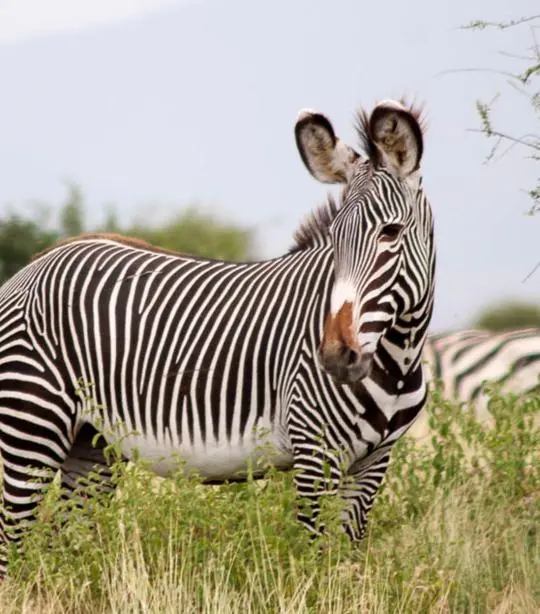
Samburu National Reserve sits along the Ewaso Nyiro River in a hot, semi arid landscape of doum palms and acacia scrub, and is one of the best places in Kenya to see the so called special five, a set of species adapted specifically to this dry northern ecosystem and largely absent from the country's more famous southern parks. These include the Grevy's zebra, distinguished by its narrower stripes and larger rounded ears, the reticulated giraffe with its sharply defined geometric coat pattern, the long necked gerenuk which browses standing upright on its hind legs, the beisa oryx with its striking facial markings, and the Somali ostrich, notable for its blue grey legs.
The Ewaso Nyiro River is the lifeline of the entire ecosystem, drawing elephant, lion, leopard and large numbers of both crocodile and hippo along its banks throughout the year, and the reserve has also become known for a small number of habituated leopards that are more reliably seen here than almost anywhere else in Kenya. Samburu is manageable as a two to three night stay and works well combined with the neighbouring reserves described below.
Buffalo Springs National Reserve
Separated from Samburu only by the Ewaso Nyiro River itself, Buffalo Springs National Reserve shares the same ecosystem and species list but tends to see noticeably fewer visitors, offering a quieter alternative or complement for travellers based in either reserve. The reserve takes its name from natural freshwater springs that bubble up within its boundaries, drawing wildlife even in the driest months, and its slightly more open terrain compared to Samburu can make for easier long distance sightings of elephant herds and predators moving across the plains.
Shaba National Reserve
A short distance further east sits Shaba National Reserve, less visited again than either Samburu or Buffalo Springs and known for its more rugged, hilly terrain and its own set of natural springs, made internationally known as the setting for Joy Adamson's later conservation work. Shaba holds the same special five species alongside strong birdlife, and its lower visitor numbers make it an appealing add on for travellers who have already spent time in Samburu and want a quieter final day in the ecosystem.
Samburu Conservancies
Beyond the three government reserves, a network of community owned conservancies has developed across the wider Samburu region, offering both additional wildlife habitat and a direct economic link between tourism and local Samburu communities. Westgate Conservancy, bordering Samburu National Reserve, allows walking safaris and night game drives that are not permitted inside the national reserves themselves, giving a different and often more intimate style of wildlife encounter.
Kalama Conservancy, also adjoining Samburu, is known for its scenic escarpment landscapes and strong community tourism model, while Namunyak Conservancy further north holds the Reteti Elephant Sanctuary, a locally run and community owned orphan elephant rehabilitation project that is among very few of its kind managed entirely by an indigenous community. Sera Conservancy, considered one of the more remote of the group, made history as the first community owned conservancy in Kenya to establish its own black rhino sanctuary, reintroducing a species that had been absent from the area for decades and now offering rare rhino tracking on foot alongside trained rangers.
Together these conservancies extend the Samburu ecosystem considerably beyond the boundaries of the national reserves, spread wildlife pressure across a much larger area, and give travellers access to activities such as walking safaris, night drives and cultural visits to Samburu villages that are simply not possible within the reserves alone.
Putting a Trip Together
Northern Kenya divides naturally into two very different kinds of experience, and how much time is available usually determines how much of the region a single trip can cover. The Samburu ecosystem, comprising the national reserve, Buffalo Springs, Shaba and the surrounding conservancies, is easily reached by light aircraft or a full day's drive from Nairobi and can be covered comfortably in three to five days, making it a realistic addition to a broader Kenya itinerary alongside the Masai Mara or Amboseli.
Lake Turkana and the Chalbi Desert sit in an entirely different category, requiring either a dedicated overland expedition of a week or more through Marsabit and Loiyangalani, or a series of light aircraft transfers for travellers with less time but a strong appetite for remoteness. Few itineraries attempt to combine the full Turkana and Chalbi route with the Samburu reserves in a single trip given the distances involved, though travellers with two weeks or more available can link Samburu, Marsabit and Turkana into one continuous northern circuit that showcases almost the full range of landscapes northern Kenya has to offer, from river fed woodland through volcanic desert to the shores of the Jade Sea itself.
The dry months from June through October and again from January through March offer the most reliable travel conditions across the entire region, with clear roads, manageable heat for desert travel, and strong wildlife concentrations along the Ewaso Nyiro. The wetter months bring a real risk of impassable roads in the Turkana and Chalbi areas specifically, so travellers set on reaching the far north should plan around these drier windows.
If you would like help designing the right route, timing and combination of parks and conservancies for your own journey through northern Kenya, we can put together a free, no obligation quotation for you.